

Adjusting aquarium water values? Here's how!
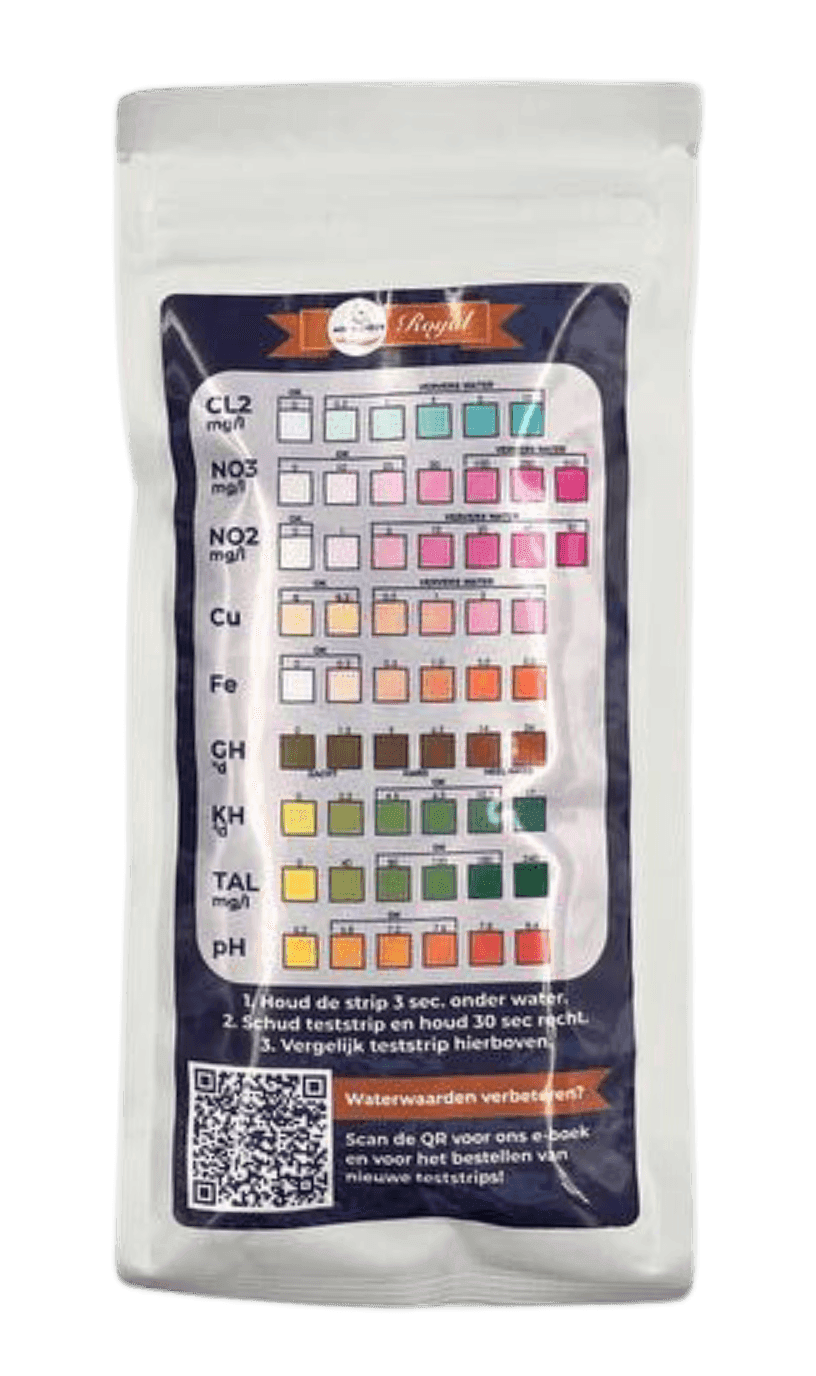
You have used the 9-in-1 test strip in your aquarium and read the results. Perhaps these showed shortages or surpluses of various water values. Then it is important to take action quickly, otherwise it can affect the health of your fish and plants. To give you a helping hand in adjusting the water values in your aquarium, we have made an e-book that you can download for free.

Restore your aquarium water values step by step?
Why are the right water values in an aquarium important?
The right water values in your aquarium are important for the health of your fish and plants. The water is their living environment and a deviation from the ideal water values can lead to stress, illness or even the death of your fish. The right water values ensure that your aquarium remains a stable and healthy environment in which fish and plants feel good and can grow well.
The most important water values in an aquarium
Take good care of your aquarium by keeping an eye on the most important water values. That keeps your fish and plants healthy and happy. These are the most important water values to watch:
- pH value: the pH value shows whether the water is acidic or alkaline. If it is too high or too low, that can be bad for your fish.
- GH (total hardness): says something about how many minerals, such as calcium, are in your water.
- KH (carbonate hardness): keeps the pH stable, so that it doesn't suddenly change.
- NH2 (ammonia): ammonia is extremely toxic to your fish. It comes from waste and can make them sick.
- NO2 (nitrite): like ammonia, nitrite is also toxic.
- NO3 (nitrate): nitrate is less harmful, but too much can cause stress and leads to algae growth.
- PO4 (phosphate): too much phosphate causes algae in the aquarium.
- CO2 (carbon dioxide): plants use this for photosynthesis.
- O2 (oxygen): fish need enough oxygen to breathe.
Adjusting aquarium water values
If the water values in your aquarium are not right, it is important to restore them quickly. Use the 9-in-1 test to find out which values deviate and then take targeted measures.
To start, you can change 20 to 50% of the water. Is that not enough? Then in our free e-book you will find various products per specific water value. Both for testing and for raising or lowering the water value.
Are all water values back in order? Then keep testing them. By checking the water values regularly you will be quick to act the next time they deviate. That way you keep the aquarium a healthy living environment for fish and plants.